

Ultimate Vitalik Buterin Bio Essential Guide
Table of Contents
- Early Life and Formative Years
- First Contact with Bitcoin and the Writing Years
- From Insight to White Paper: The Birth of Ethereum
- Building the Team and Funding the Dream
- Frontier to Homestead: The Early Network
- The DAO Crisis and the ETH–ETC Split
- The Merge: A New Social Contract
- Core Philosophy: Decentralization, Simplicity, and Privacy
- Key Technical Contributions and Roadmap
- Philanthropy, Public Image, and Common Misconceptions
- Vitalik in September 2025: Where He Stands Now
- Frequently Asked Questions
- Sources and Further Reading
Early Life and Formative Years
Vitaly Dmitriyevich Buterin was born on January 31, 1994, in Kolomna, Russia, and moved to Canada with his parents at age six. Identified as gifted in elementary school, he gravitated toward math, programming, and economics. In Toronto, he attended The Abelard School, a small, Socratic style high school that rewarded depth over rote learning. He later enrolled at the University of Waterloo, where he studied advanced computer science, worked under cryptographer Ian Goldberg, and won a bronze medal at the International Olympiad in Informatics (2012).
These facts are crucial because they explain the unusual mix of theory, curiosity, and systems thinking that defines his work. The same student who enjoyed finding patterns in numbers would later try to encode entire social contracts into code.
First Contact with Bitcoin and the Writing Years
In 2011, at age 17, Buterin learned about Bitcoin. Initially skeptical, he was intrigued by a money system that ran without a central operator. Lacking the capital for mining or buying coins, he began writing for Bitcoin focused websites. He later co-founded Bitcoin Magazine with Mihai Alisie, becoming its editor in chief and one of the earliest explainers of crypto mechanics for a global audience. This period was not a mere footnote; it trained him to translate abstract concepts into clear prose and, critically, to identify the constraints in Bitcoin’s scripting system.
From Insight to White Paper: The Birth of Ethereum
By late 2013, Buterin’s core insight had crystallized: instead of building one blockchain for each application, why not build one programmable blockchain where anyone could create their own applications? In November 2013, he circulated the Ethereum white paper, titled “A Next Generation Smart Contract and Decentralized Application Platform.” It proposed a Turing complete environment and general purpose “smart contracts” that would allow developers to deploy arbitrary logic, not just simple value transfers. This reframed blockchains from mere ledgers into global state machines that execute code under consensus.
He left the University of Waterloo in 2014 after receiving the prestigious Thiel Fellowship (USD 100,000) to work on Ethereum full time, a move that signaled both outsider support and the project’s urgency.
Building the Team and Funding the Dream
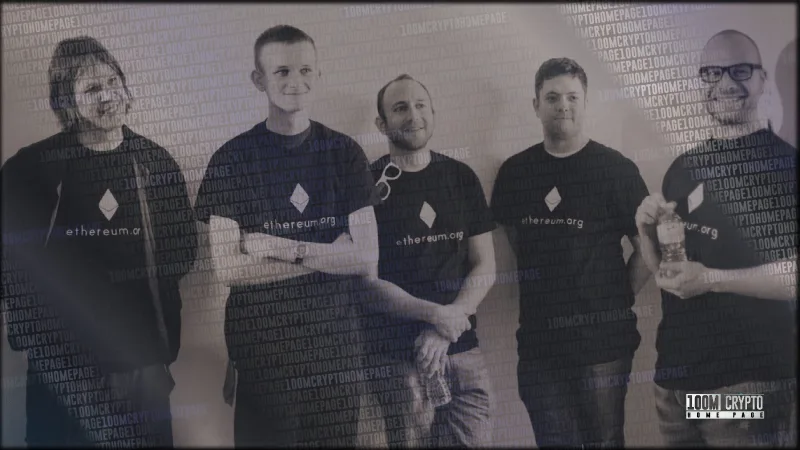
A diverse founding crew coalesced around the white paper, including Gavin Wood (who wrote the Yellow Paper and coined “Web3”), Joseph Lubin, Anthony Di Iorio, Charles Hoskinson, Mihai Alisie, Amir Chetrit, and Jeffrey Wilcke. They brought a mix of engineering, product, and organizational skills.
In mid 2014, the project launched a crowdsale of its native asset, ether (ETH), to fund development, raising over 31,000 BTC (about USD 18 million at the time). The goal was not just to create a currency, but to provide “gas,” a mechanism to meter computation across the network. The sale seeded the Ethereum Foundation in Zug, Switzerland, establishing a structure to steward a public goods protocol rather than a for profit product. This foundational choice continues to shape Ethereum’s culture today.
Frontier to Homestead: The Early Network
Ethereum’s genesis block was mined on July 30, 2015, under the codename “Frontier,” a developer focused environment with command line tooling. In March 2016, the “Homestead” upgrade marked a more stable and robust phase. Smart contracts and dApps began to proliferate. The ERC 20 token standard soon followed (proposed in November 2015, finalized 2017), making it trivial to issue new tokens and foreshadowing the ICO boom of 2017 and the rise of DeFi and NFTs in later years.
These weren’t just features; they were composability in action, a set of “money Legos” for the internet, where small programs could interact with each other through predictable interfaces.
The DAO Crisis and the ETH–ETC Split
In 2016, an ambitious experiment called The DAO raised an unprecedented amount of ETH to create a decentralized venture fund. However, a vulnerability in its smart contract logic allowed an attacker to drain a significant portion of the funds. The community faced a dilemma: respect the immutability of the code and let the exploit stand, or intervene to restore the funds.
After a fierce debate, on July 20, 2016, at block 1,920,000, the network executed a hard fork that moved the affected ETH to a recovery contract known as WithdrawDAO. The majority of stakeholders followed this new chain, which retained the name Ethereum (ETH). A minority, arguing against the intervention, continued on the original, unaltered chain, now known as Ethereum Classic (ETC).
This painful split publicly demonstrated that “code is law” was never a simple slogan. It revealed the deep trade offs between protocol neutrality and the social layer that maintains it. For Buterin, the episode cemented two lessons: blockchains are socio technical systems, and security engineering is not a luxury, it is a survival tool.
The Merge: A New Social Contract
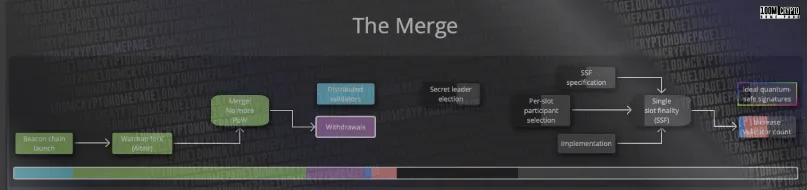
On September 15, 2022, Ethereum completed The Merge, transitioning its consensus mechanism from Proof of Work to Proof of Stake. The environmental impact was immediate and dramatic, with an estimated 99.95% reduction in electricity consumption. While this move did not directly lower gas fees, it fundamentally altered the network’s social contract. Validators now stake ETH as collateral, aligning network security with capital risk instead of energy expenditure. This also laid the critical groundwork for future scaling solutions like data sharding.
From an engineering perspective, The Merge was a monumental feat of coordination, migrating a live, multi billion dollar network without downtime. It reinforced a key theme in Buterin’s career: delivering ambitious change with incremental, carefully planned steps.
Core Philosophy: Decentralization, Simplicity, and Privacy
Beyond the technical details, three pillars guide Buterin’s public thinking:
Decentralization as a Constraint, Not a Buzzword: Decentralization isn’t a marketing claim; it’s a design budget. He argues that protocols must be operable by many actors with modest resources, or they will inevitably centralize power and recreate the systems they aimed to replace.
Long Term Protocol Simplicity: Ethereum’s core rules should become simpler over time, even as functionality grows at the edges. He advocates for a minimal, verifiable core, pushing complexity to higher layers where it’s easier to manage and replace.
Privacy as a Precondition for Freedom: Buterin sees privacy enhancing technologies, especially zero knowledge proofs (ZKPs), as essential for user safety, credible neutrality, and mainstream adoption. He has consistently advocated for tools that offer privacy by default while allowing for compliance where necessary.
Key Technical Contributions and Roadmap
Buterin’s influence is evident across Ethereum’s technical stack:
The EVM: The Ethereum Virtual Machine remains the standard for smart contract execution, widely adopted by Layer 2 networks and other blockchains.
Rollup-Centric Roadmap: He has championed a future where Layer 1 Ethereum serves as a secure data availability and settlement layer, while most execution happens on Layer 2 rollups. The Proto Danksharding upgrade (EIP 4844), delivered with the Dencun upgrade on March 13, 2024, was a major step in this direction. It introduced blob transactions that significantly lowered data costs for L2s. The long term goal remains full Danksharding.
Staking and Finality: He continues to explore ways to lower the barriers to validation (e.g., reducing the 32 ETH requirement) and achieve faster finality to improve user experience.
Security and Quantum Readiness: Buterin frequently warns about the long term risk of quantum computers breaking current cryptography, urging proactive research into post quantum solutions.
Zero Knowledge Integration: He is a major proponent of integrating ZKPs deeper into the protocol for both privacy and scalability.
Philanthropy, Public Image, and Common Misconceptions
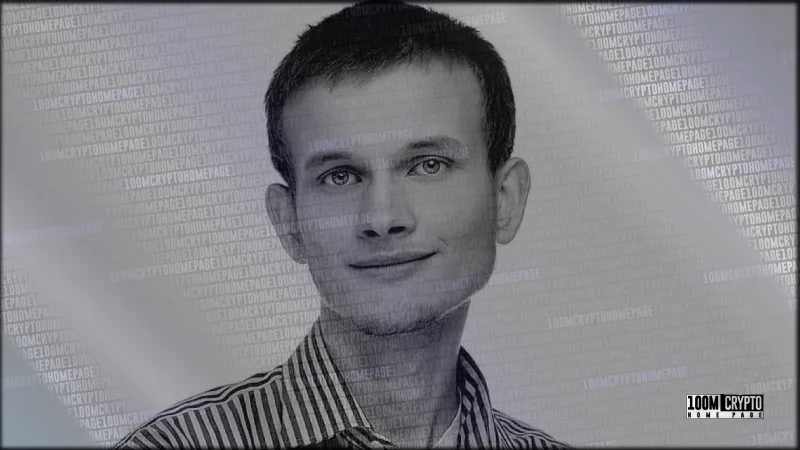
Philanthropy: Buterin’s philanthropic efforts are substantial. His ~USD 1.2B donation of SHIB tokens to India’s Crypto Relief fund during the COVID crisis in 2021 remains one of the largest crypto donations ever. He is also a key supporter of public goods funding (like Gitcoin), longevity research, and other forward thinking causes.
Public Image: Media often frames him as a “genius coder,” but a more accurate description is a “principal systems designer.” He prefers to communicate through research posts and technical forums rather than the spotlight.
Common Myths:
- “Vitalik controls Ethereum.” False. Governance is distributed across client teams, researchers, and the community. Social consensus holds the ultimate power.
- “The Merge fixed gas fees.” Indirectly. It fixed energy usage. Fee reduction is the primary goal of the rollup-centric roadmap and sharding upgrades.
- “Decentralization means slow.” It means being careful about trust assumptions. With rollups, decentralized systems can achieve high speeds.
Vitalik in September 2025: Where He Stands Now
As of September 2025, Buterin remains an intellectual center of gravity for Ethereum and the broader Web3 ecosystem. His focus has sharpened on several key areas:
Maturing the L2 Ecosystem: Following the successful implementation of Proto Danksharding (EIP 4844) with the Dencun upgrade in March 2024, his recent work has focused on the next stages of data sharding and ensuring the economic and technical sustainability of Layer 2s. On May 7, 2025, Ethereum activated the Pectra upgrade (epoch 364032). This included EIP 7702, allowing EOAs to temporarily act like smart accounts during a transaction, and EIP 7251, raising the validator effective balance limit from 32 ETH to 2,048 ETH, a change that consolidates validators and simplifies operations.
Practical Privacy: He has moved from theoretical advocacy to championing tangible privacy solutions. In 2025, the Privacy Pools protocol launched on Ethereum (developed by 0xbow), and Vitalik himself was one of the earliest users. Combined with ongoing work on stealth addresses, this represents a concrete step toward balancing privacy with regulatory compliance, making on chain privacy practical for everyday users.
AI and Crypto Convergence: Buterin is increasingly vocal about the intersection of AI and cryptography. He explores how blockchains can help mitigate risks from centralized AI by creating more transparent, accountable, and decentralized models.
Beyond Finance: While DeFi remains a core use case, his recent speeches and writings emphasize non financial applications: decentralized identity, public goods funding mechanisms, and new forms of social organization.
He continues to balance near term pragmatism with long-term vision, building systems designed to scale human agency rather than extract value.
Frequently Asked Questions
Why is Vitalik Buterin important?
He transformed the concept of a blockchain from a simple payment system into a general-purpose world computer, enabling smart contracts, DeFi, NFTs, and the entire Web3 ecosystem.
What happened during The DAO hack?
A bug in a smart contract allowed an attacker to drain funds. In July 2016, at block 1,920,000, the community hard forked the network to restore the funds, creating Ethereum (ETH). Those who opposed the intervention continued the original chain as Ethereum Classic (ETC).
What did The Merge change?
It switched Ethereum from Proof of Work to Proof of Stake, cutting energy usage by over 99.95% and setting the stage for future scalability upgrades.
Is Vitalik still coding daily?
He primarily contributes research, specifications, and high level direction. The actual implementation is handled by a distributed network of client teams and researchers.
What is his current stance on privacy?
He considers it essential infrastructure for a free and open internet. In 2025 he actively supports Privacy Pools and stealth addresses, seeing them as tools that combine practical privacy with compliance options.
Sources and Further Reading
- Vitalik Buterin – Wikipedia
- Ethereum.org – Official documentation on The Merge and the roadmap
- Ethereum Foundation Blog – DAO fork and WithdrawDAO details
The vision that Vitalik Buterin set in motion continues to inspire thousands of builders worldwide. If you are creating a project on Ethereum and want to be part of this future, list your project on 100MCrypto to earn curated, lasting visibility in front of a crypto-native audience.
Ultimate Vitalik Buterin Bio Essential Guide
#100MCrypto #VitalikButerin #Ethereum #CryptoHistory #Blockchain #Web3 #DeFi #SmartContracts #CryptoVisionary #EthereumMerge
Looking for more?
Dive deeper into the crypto world:
• Stay updated with our Blog
• Find top influencers and exclusive deals
• Discover the leading crypto companies
• Learn the basics (and beyond) in our Crypto Academy
🧭 Already building something serious in Web3?
Make your project visible to the right audience — permanently.
👉 Secure your space on 100MCrypto
